

You Don’t Need a 5-Star Budget for a 5-Star Experience: What Is the Cost Range for Booking a Meeting Venue?
Every meeting begins with a constraint that shapes every other decision. Budget determines location, format, duration, and even how participants behave once they arrive. Strategy sessions require focus. Training programmes depend on structure. Team retreats succeed when people feel removed from everyday pressure. Despite this, many organisers dismiss resort destinations at the outset, assuming beachfront venues automatically sit outside practical financial limits.
That assumption rarely survives closer inspection. Thailand’s meetings and incentives market operates on layered pricing models influenced by timing, group size, and packaging. Phuket stands out as a destination where meeting venues span a broad cost range, supporting both functional corporate sessions and experience-led gatherings. Resorts such as Kata Beyond Resort demonstrate how professional infrastructure, attentive service, and a destination setting can align with realistic budgets rather than compete with them.
.jpg)
Meeting venues in Thailand generally fall into three pricing tiers, each designed to support different objectives. The distinction between them lies less in prestige and more in how effectively the venue supports the desired outcome.
Typical Cost Ranges for Meeting Venues in Thailand
Basic or hourly meeting rooms typically cost between THB 3,000 and 8,000 per half day. These spaces prioritise efficiency and accessibility and are most commonly found in office buildings, serviced offices, and smaller city hotels. They provide essential furnishings such as boardroom or classroom seating, simple presentation equipment, and basic refreshments. This tier works well for interviews, short workshops, and internal planning sessions where the agenda is tightly defined. Flexibility remains limited, layouts rarely change, and the environment offers little stimulation beyond functional necessity.
Mid-tier venues represent the most balanced option for many organisations, with daily rates commonly ranging from THB 15,000 to 50,000. This category includes hotel and resort meeting spaces that offer structured meeting packages designed to control costs while improving experience. In Phuket, many resorts price meetings on a per-person basis rather than charging standalone room hire. The Thailand Convention and Exhibition Bureau reports that delegate packages in resort destinations often begin around THB 1,200 to 1,500 per attendee during shoulder and low seasons. Once attendance reaches a set threshold, meeting room rental is often included.
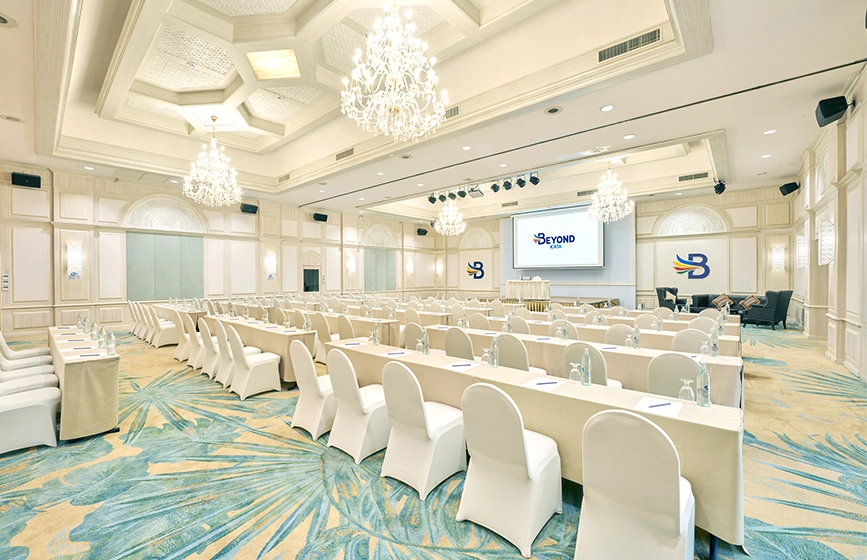
Kata Beyond Resort operates firmly within this mid-tier range. Its meeting facilities combine professional audiovisual infrastructure with a beachfront environment that changes how participants engage. The setting encourages longer focus periods and smoother transitions between formal sessions, meals, and informal discussion, without the logistical challenges associated with off-site venues.
Premium and beachfront venues sit at the top end of the pricing spectrum, with daily rates starting around THB 60,000 and extending well beyond THB 200,000 for highly customised events. These venues cater to executive meetings, incentive programmes, and destination conferences where experience carries equal weight to agenda delivery. Pricing reflects the level of customisation involved, from curated menus and advanced audiovisual production to dedicated event teams and personalised layouts. Hospitality pricing analysis from Statista shows that premium venues often consolidate services that would otherwise be sourced separately, improving cost predictability despite higher headline rates.
What Influences Meeting Venue Pricing?
Meeting venue pricing reflects several structural factors beyond room size alone. Location plays a significant role, with city-centre venues charging for accessibility and transport convenience, while resort destinations integrate accommodation, dining, leisure, and meeting space into a single environment. In Phuket, this integration reduces logistical friction and allows agendas to unfold at a more natural pace.
Seasonality also affects pricing. High season, which typically runs from November to March, brings stronger demand and firmer rates. From May to October, demand softens and venues compete more actively. Tourism Authority of Thailand data shows that this period creates greater negotiation flexibility, with resorts often offering added value through extended room usage, upgrades, or discounted accommodation.
Inclusions and packaging further influence overall cost. Bundled meeting packages provide transparency and reduce the risk of unexpected expenses. Standalone bookings, by contrast, often accumulate charges across catering, equipment, staffing, and overtime. Group size also shapes pricing dynamics. Larger groups increase service requirements but frequently unlock stronger bargaining positions, particularly when meeting space is paired with accommodation bookings.
Why Kata Beyond Resort Delivers Strong Value for Meetings
Kata Beyond Resort consistently appeals to organisations seeking balance rather than excess. Its meeting packages adapt to different group sizes without sacrificing service quality. On-site teams support events from setup through execution, reducing operational friction for organisers. The proximity between meeting rooms, dining areas, and outdoor spaces allows schedules to flow naturally, encouraging participation without fatigue.
Research published in hospitality and workplace environment studies indicates that access to natural light and open surroundings improves attention and engagement during extended meetings. In a beachfront setting, this advantage becomes practical rather than aesthetic, directly supporting productivity and interaction throughout the day.